On-site AI (FDE)
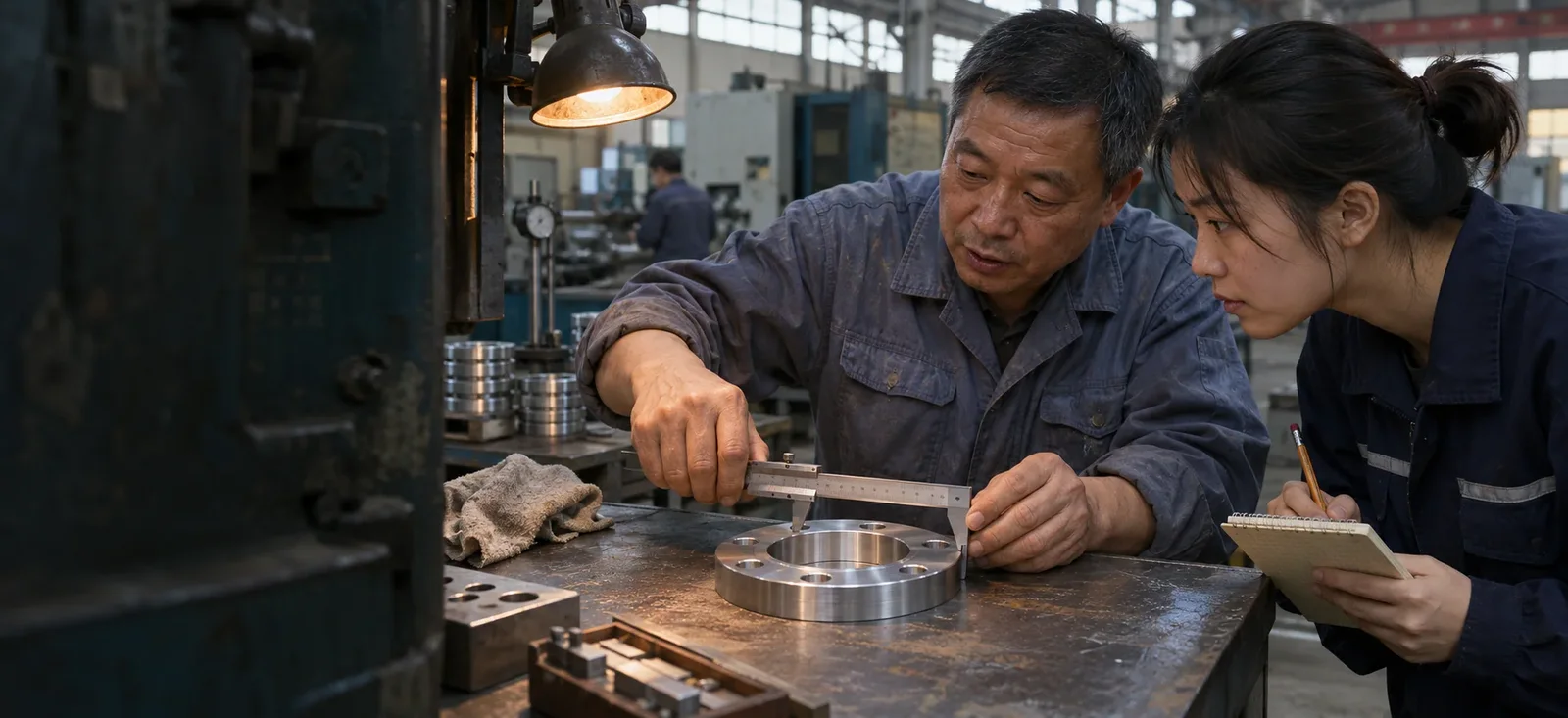
A factory inspector shows a caliper to an engineer taking notes.

Engineers on site.
AI that fits the job.

An engineer watches your inspector measure a part, then follows that order through to sales. The inspector records the reading once. The order team can check progress, and sales has the facts to reply. Together we test where software or AI can help.

An inspector shows an engineer how to read the caliperAI-generated illustration

Working together for the first time

What will it take?
What will you get?

Estimate the hours you could save

What we need from you

Choose a task you do often, and ask the person who knows it best to walk us through it. Bring a sample of any forms you use, with customer details removed. During the pilot, ask that colleague to try the new process with a fresh work item. We agree on the time commitment up front.

What we deliver

After the visit, you get a recommendation on where to start, how to judge the result and a quote for a pilot.

If you go ahead with the pilot, we deliver one agreed tool your staff can keep using. It might be an order register that finance can reconcile or an assistant that drafts order updates. We train a team member with your own examples and ask them to handle the next order independently.

How we price the work

We confirm the fee for the assessment before the visit. The pilot quote reflects days on site, software integrations and the number of people to train. Subscriptions or usage charges, one-time implementation and ongoing maintenance are itemized. Work begins once you approve the scope, total and acceptance criteria.

What an on-site engineer can do

Follow one order.
Which step needs work?

Say a shop orders 300 gift box sets from a manufacturer. We look at the forms your team uses and who takes over at each step, then configure software or an AI assistant to fit. Pick the step that causes the most trouble to see what to bring, what we deliver and how you can check it.

Handle new inquiriesOn-site example

A buyer asks, “Can you make this to order?” Who picks it up?

An engineer reviews a few past conversations with sales after customer details have been removed. A senior rep shows what to ask first and when to hand over. The Inquiry Assistant can collect and summarize information from WhatsApp, and the Website Shopping Assistant can help buyers compare options.

What you get

An inquiry handoff sheet

Buyer request
300 custom gift box sets for a retail store
Still to ask
Box dimensions and required arrival date
Owner
Sales checks production requirements and lead time before quoting

How to check it Give sales a fresh conversation and only the handoff sheet. Ask the rep to explain what the buyer wants, what’s missing and who should take the next step.

Read the full example Choose another step ↑

Find the right product specsOn-site example

When a new hire gets a size question, which spec sheet should they use?

The product owner brings the current spec sheet and a retired version. We choose a few questions sales gets most often, link each answer to an approved source and agree on who will keep it current.

What you get

A searchable product knowledge base

Staff question
What sizes can we offer for this gift box?
Source
A link to the current specification so staff can check it
Exception
Refer nonstandard sizes to the product owner

How to check it Have a new colleague look up a size and open the original spec sheet. Replace one version, then ask the same question again to check that the answer updates.

Read the full example Choose another step ↑
Check the margin on an orderOn-site example

After freight, how much gross profit is left on this order?

The engineer sits down with sales, order management and finance to go through one quote. They connect the quantities, costs, freight and contract. They reconcile a completed order first, then agree on what to record on new orders and who can see it.

What you get

An order register with quotes, costs and gross profit

Order
300 custom gift box sets for a retail store
Calculation
Quote, cost and freight on the same order record
Open item
Order management confirms freight, then finance checks gross profit

How to check it Ask finance to recalculate using the original records. Have the order coordinator find the contract and delivery record from the same order.

Read the full example Choose another step ↑
Track samples and deliveryOn-site example

The sample is held up. Who has the next move?

The project owner brings a schedule. Design, sample production and the order coordinator agree on who owns each task, when it’s due and who receives it. Then they enter the gift box order in the project workspace.

What you get

A project schedule with owners and sign-off records

Done
The retailer approved the design
In progress
The sample maker is producing the first sample
Next
The coordinator gets the retailer’s sample approval and schedules production

How to check it Ask the incoming colleague to find the delay, the task owner and the sign-off in the workspace without having to message anyone.

Read the full example Choose another step ↑
Draft order updatesOn-site example

A customer asks for another update. Does your team write it from scratch?

An engineer sits with an order coordinator to see how they look up status and reply. They select a few good past emails and specify the tone, the sources to check and the commitments that need a person’s approval.

What you get

An assistant that drafts order updates

Known status
The first sample for the 300-set gift box order is in production
Draft reply
“We’re making the sample now. Once it’s approved, we’ll confirm the production schedule with you.”
Staff review
Check the latest status before sending. A person confirms any date still under discussion.

How to check it Try it with a new email asking for an update. Have the coordinator check the facts and tone, then record how many edits were needed and how long it took.

Read the full example Choose another step ↑
Make order intake repeatableOn-site example

Every order needs a check and a handoff. Can your own team update the rules?

An engineer and your team document how you accept orders. They test one complete order and one that’s missing details. A custom agent checks the rules and lists the next steps. In the joint build, your team changes one rule and runs the test again.

What you get

A repeatable intake process your team can maintain

Check first
Are the dimensions, artwork and arrival date present?
Missing details
List the follow-up questions and hand them to the order coordinator
Complete order
Prepare the sampling task for the project owner to review and schedule

How to check it Add a rule requiring artwork approval. Ask a team member to rerun an order with no artwork and confirm the process pauses and flags the missing item.

Read the full example Choose another step ↑

Try it with sample data

See the work in practice

Factory floor · Inspection bench

Three readings.
Why enter them twice?

The inspector writes the dimensions on paper, then copies them into a report before the shift ends. An engineer watches one inspection and asks which readings would need a second look.

They put the tolerance into a small tool. One entry now produces a draft report, and the inspector decides which parts to measure again.

What you getA draft inspection report that flags readings outside the tolerance.

See how the next shift picks up a sample order
Original shop-floor record

Part dimension checks

3 parts sampledTolerance 20.0–20.2 mm
Measured part dimensions in millimeters
PartMeasured size
Part A20.1 mm
Part C20.0 mm
Draft the inspection report

Draft for the inspector

1 of 3 parts needs a second check.

Part B measures 20.4 mm, which is 0.2 mm over the upper limit. Ask the inspector to measure it again and record the result. Parts A and C are within tolerance.

Retail store · Receiving desk

It’s on the tag.
Why type it again?

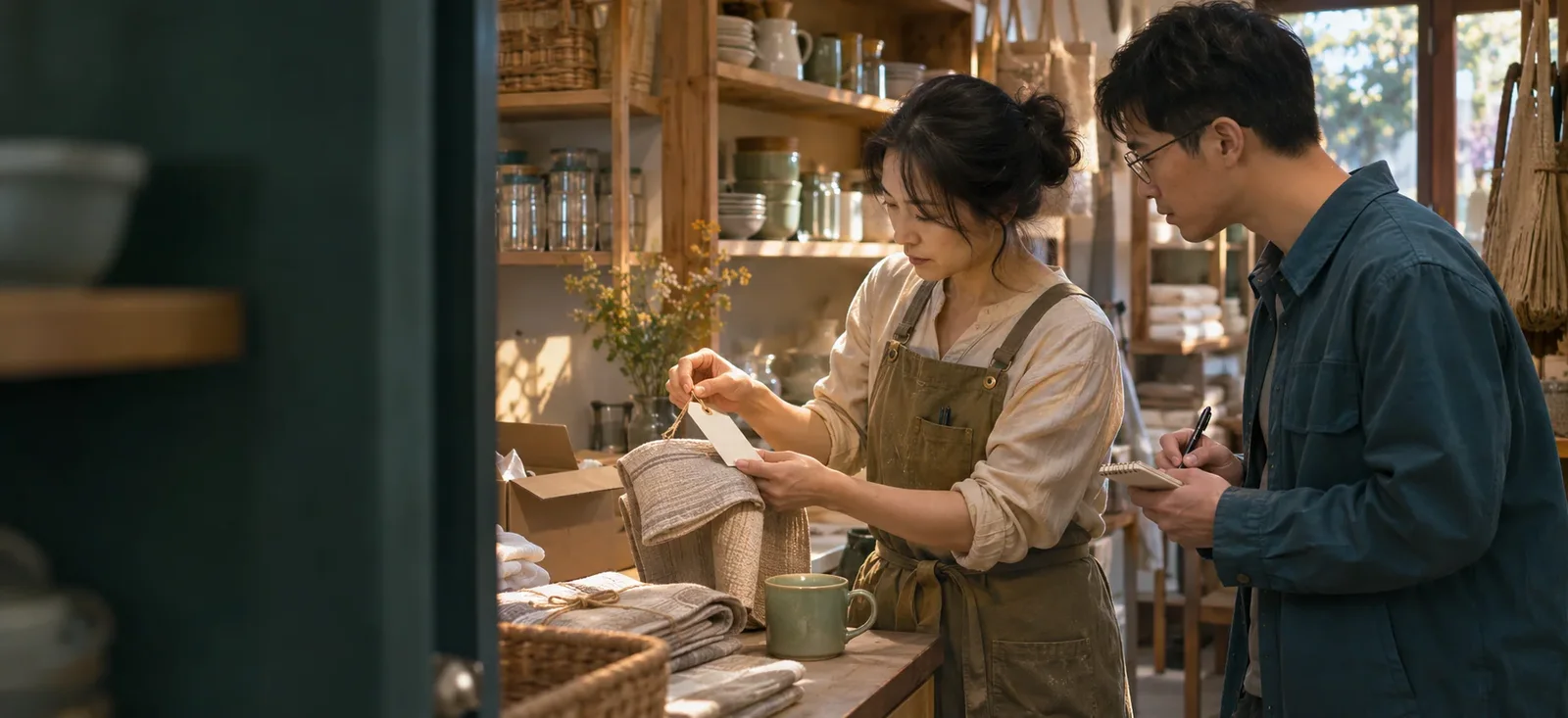
When new stock comes in, an associate reads from the tag and types out a title, dimensions and selling points. An engineer enters one item with them and asks which details can be copied and which need a supplier check.

Together they draft a listing in the store’s usual format. When the next product arrives, the associate checks the details, fills in the gaps and publishes the listing.

What you getA draft product listing with a title, specs and a short list of things to confirm.

See who handles questions after a listing goes live
Details recorded at receiving

New stock intake sheet

Home textilesSource Product tag
Item / Color
Linen napkin / Off-white
Size / Pack
40 × 40 cm / Set of 2
Care instructions
Missing from the tag
Draft the product listing

Draft for the store team

Off-White Linen Napkins, Set of 2

Two matching napkins for a table set for two. Each napkin measures 40 × 40 cm.

Check before publishing Are these machine washable? Ask the supplier and add the care instructions before publishing.

What else can an engineer help with?

Factory floor Turn a technician’s troubleshooting steps into a guide new hires can search. Or draft a materials list from orders and inventory for the production planner to check.

Retail store Help customer service find answers, group recurring complaints in reviews or turn store visit photos into a daily report a manager can check.

A quick time estimate

A few minutes each.
How much per month?

Start with an estimate. Once you run a pilot, time the same task again, including checks and corrections. Then enter what you actually measured.

Estimated time saved per month16 h

The starting figures are for illustration. With a quote in hand, decide whether the time freed up is worth expanding the pilot.

From first visit to handover

How your team takes part
and checks the work

  1. Show us how it works today

    The person who does the task walks us through it. Together we record how long it takes and where mistakes tend to happen.

  2. Pilot one small task

    Agree on what to test and how you’ll judge it. We build a sample from an old record, and you show us what needs adjusting.

  3. Have a colleague run the next one

    We show your staff how to use the tool and connect the software agreed for the pilot. Your colleague works through a fresh example from start to finish. Compare the time, errors and omissions.

  4. Decide whether to roll it out

    Review who is using it and what still needs fixing. You decide whether to keep improving it in one role or take it to more production lines or stores.

Who should you speak to on site?

The service lead agrees on the task, budget and acceptance criteria with you. The on-site engineer builds the tool with your staff and trains them. Your project contact coordinates dates, gathers pilot feedback and follows up on changes.

On-site assessment

From order to delivery,
where does your team lose time?

Email us or reach out on WeChat. Tell us who does the task today and how often. A HONLAN advisor will confirm the visit arrangements and fee with you.

Email a HONLAN advisor
Message Jerry on WeChat
WeChat QR code for Jerry, a HONLAN advisor

On a computer, scan the code with WeChat on your phone. On a phone, take a screenshot and open it from the photo album in WeChat’s scanner.